From AI Artwork to Real Custom Medals: Design Approval and Manufacturing Explained
Creating a custom medal often begins with an idea.
A buyer may have a complete design file, a hand-drawn sketch, a reference photograph or an image generated using artificial intelligence.
Today, AI-generated artwork makes it easier than ever to explore creative medal designs.
But there is an important distinction:
An image that looks impressive on a screen is not necessarily a design that can be manufactured exactly as shown.
Turning artwork into a physical metal medal requires more than simply sending an image to a factory.
It involves communication, manufacturing assessment, technical drawings, mold preparation and production.
Understanding these steps can help buyers avoid unnecessary revisions, additional tooling costs and delivery delays.
1. Two Processes Behind Every Custom Medal Order
Custom medal manufacturing can be understood as two connected processes.
The first is the design communication and approval process.
This involves discussing the buyer’s requirements, reviewing the artwork, identifying manufacturing limitations and agreeing on the specifications.
The second is the physical manufacturing process.
This includes mold preparation, metal forming, polishing, plating, coloring, inspection and packing.
Both are important.
A factory may have the equipment to produce complex medals, but production can still go wrong if the intended design is not understood or approved correctly.
For this reason, design confirmation is a key part of manufacturing, not simply an administrative step.
2. Can AI-Generated Medal Designs Be Manufactured?
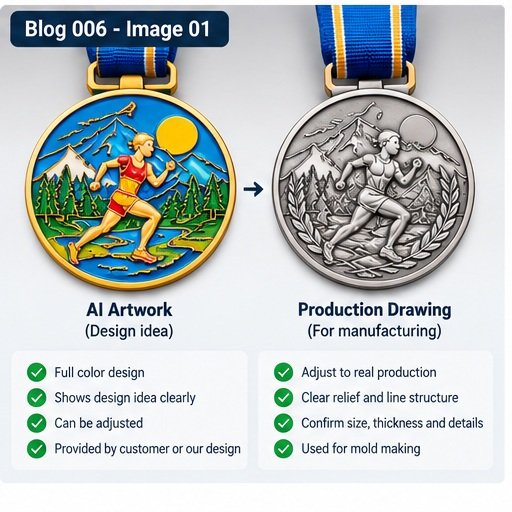
AI-generated images can be useful for showing the general appearance a buyer wants.
They may communicate the theme, approximate shape, colors and overall visual style.
However, such images often do not provide the technical information required for production.
For example, an AI-generated medal may contain:
- Extremely fine details that are difficult to reproduce in metal.
- Color gradients that cannot be achieved through conventional enamel filling.
- Deep relief features without a clear understanding of actual metal thickness.
- Thin connections or complex cutouts that may create structural weaknesses.
- Lighting and reflections that do not correspond to a specific plating finish.
This does not mean AI artwork cannot be used.
It means the image should be treated as a design reference that needs manufacturing review.
A supplier may recommend adjusting certain details while preserving the main appearance of the original concept.
The goal is not to reproduce every digital effect at any cost.
The goal is to create a real medal that reflects the intended design and can be manufactured reliably.
3. Design Review Comes Before Production
When a buyer submits artwork, the first task is to understand what the finished product should achieve.
Important questions may include:
What size should the medal be?
Does the design require 2D or 3D relief?
Are the colors intended for enamel filling, UV printing or a combination of processes?
Are there open areas, thin metal sections or complicated shapes that require special attention?
What metal finish and ribbon are expected?
Not all these details need to be confirmed in the first inquiry.
However, they become important before the design is approved for manufacturing.
If a problem is identified, the supplier should explain which area may need adjustment.
For example, a complex gradient may need UV printing rather than traditional soft enamel.
A very thin connection between two parts of a medal may need reinforcement to reduce the risk of damage.
A highly reflective gold appearance in an AI image may also need to be matched to an actual available plating finish.
These discussions help transform a visual concept into workable product specifications.
4. From Design Approval to Production Drawings
Once the design direction, specifications and order are confirmed, the project moves toward technical preparation.
The manufacturing team prepares production drawings based on the approved requirements.
These drawings are different from marketing images or artistic renderings.
Their purpose is to communicate the dimensions, structures, relief features and other information needed for manufacturing.
The drawings can then be reviewed by the relevant mold-making team to prepare the tooling details.
At Medal-Ray, customer confirmation of the mold-related drawings is an important step before tooling proceeds.
This provides another opportunity to check that the planned product corresponds to the approved design.
Buyers should pay particular attention to elements such as text, logos, dimensions, relief placement and open areas.
A small mistake in artwork can become a much more expensive problem after the mold has been made.
5. Why Mold Approval Matters
A custom mold is created to reproduce the agreed medal design.
Once mold manufacturing has started, certain changes may become more difficult.
If a buyer requests a small adjustment after the mold is completed, it may sometimes be possible to modify the existing tooling.
However, additional tooling charges may apply.
Larger design changes may require substantial reworking or an entirely new mold.
For example, changing a small detail is not necessarily the same as changing the overall shape, relocating major features or introducing new cutouts.
Whether a mold can be modified depends on the tooling structure and the exact nature of the change.
This is why the design and mold drawings should be checked carefully before approval.
Clear approval before tooling is one of the most practical ways to reduce avoidable production costs and delays.
6. What Happens After the Mold Is Ready?
After the mold is completed and the necessary checks are made, the medal can proceed through the appropriate manufacturing process.
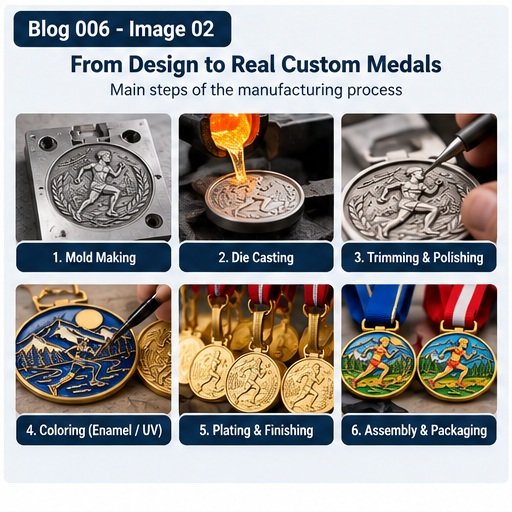
For zinc alloy die-cast medals, a typical workflow may include the following stages.
Metal die casting
Molten zinc alloy is formed using the prepared mold to create the basic medal structure.
Trimming and surface preparation
Unwanted material is removed, and the product is prepared for subsequent finishing operations.
Depending on the required appearance, this may involve grinding or polishing.
Plating
The medal receives the specified metal finish, such as gold, silver, bronze or another approved plating option.
Coloring or printing
If required, the design may receive soft enamel, imitation hard enamel, UV printing or a suitable combination of finishing processes.
The exact sequence and processing requirements depend on the design and chosen manufacturing methods.
Inspection and assembly
Finished medals are checked against the agreed requirements. Approved products can then be assembled with ribbons and packed for delivery.
Not every medal uses precisely the same process.
For example, stamped metal products and die-cast zinc alloy medals have different forming requirements.
Manufacturing steps should therefore follow the approved design rather than a rigid, one-size-fits-all checklist.
7. Do Buyers Always Need a Physical Sample?
A physical sample can be helpful when the medal has unusual construction, demanding finishing requirements or details that are difficult to judge from a drawing.
It allows the buyer to review the actual appearance before mass production.
However, not every project requires the same sampling arrangement.
Depending on the order and the agreed approval procedure, a buyer may request a physical sample or review photographs of an initial production piece.
The important point is to agree on the approval method before production reaches the relevant stage.
A photograph can help show appearance, but it does not fully replace the ability to inspect the weight, surface texture and physical details of an actual medal.
When these characteristics are especially important, requesting a physical sample may be worthwhile.
8. How Long Does Custom Medal Production Take?
Production time depends on the design, manufacturing process and order requirements.
As a practical reference, some conventional custom medal orders may require approximately 10–15 days for production after the necessary approvals and production arrangements are complete.
More demanding processes can require additional time.
For example, imitation hard enamel projects may take around 20–30 days in our manufacturing experience because of their additional finishing requirements.
These are reference periods, not guaranteed delivery promises.
Artwork revisions, mold preparation, sample approvals, factory scheduling and shipping must also be considered.
If the medals are needed for a specific event, buyers should communicate the required delivery date as early as possible.
This allows the manufacturing plan and shipping arrangements to be assessed together.
9. How Buyers Can Avoid Unnecessary Delays
The best way to reduce avoidable revisions is to confirm the important details before tooling begins.
Before approving the manufacturing drawings, buyers should check:
- Correct text, names, dates and logos.
- Overall dimensions and intended thickness.
- Relief structure and cutout positions.
- Metal finish and coloring requirements.
- Ribbon design and attachment method.
- Any critical appearance or functional requirements.
If an element is uncertain, it is better to raise the question before the mold is manufactured.
Manufacturing teams can help evaluate feasibility, but they should not be expected to guess which artistic details the buyer considers essential.
Clear communication helps both sides work toward the same finished product.
Final Thoughts
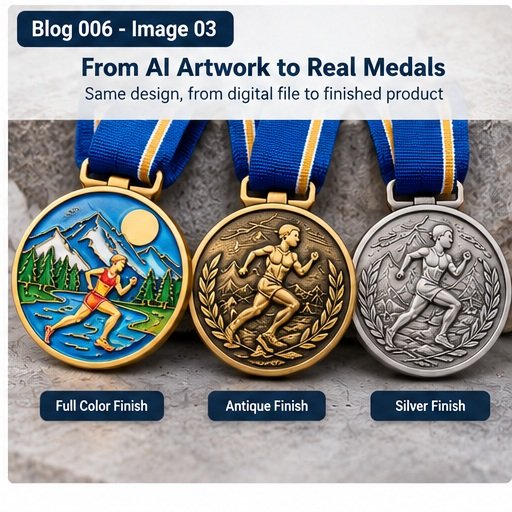
A custom medal does not move directly from a beautiful image to a finished metal product.
Between those stages are practical decisions about design structure, manufacturing processes, material behavior and technical approval.
AI-generated artwork can be a useful starting point, but it still needs to be translated into a manufacturable design.
Careful production drawing and mold confirmation help reduce the risk of unexpected changes after tooling begins.
At Medal-Ray, we believe good manufacturing support starts before the first medal is cast.
We take the time to understand the intended design, identify practical limitations and communicate the decisions that matter before production.
A good-looking design is the beginning. A manufacturable design is what makes the finished medal possible.
More Than Just a Quotation.
For custom medal inquiries, contact ray@craftmedals.com.
Have a Custom Medal Project?
Share your design, size and estimated quantity. We’ll help review the manufacturing requirements.