
Matte vs Shiny Custom Medals: How to Choose the Right Metal Finish
When ordering custom medals, most buyers are familiar with gold, silver and bronze finishes.
These are common choices for sporting events, competitions and commemorative awards.
But choosing the metal color is only part of the decision.
A shiny gold medal and a matte gold medal can have very different appearances, even when they share the same design, material and dimensions.
The difference is not simply a matter of personal taste. Surface reflectivity can also affect visible fingerprints, minor scratches, polishing requirements and manufacturing quality control.
Understanding these factors can help buyers choose a finish that looks good not only in a product photograph, but also in everyday handling.
1. Gold, Silver and Bronze Are Only the Starting Point
Gold, silver and bronze are traditional medal colors because they are widely recognized and easy to associate with sporting achievements.
However, the same metal color can be presented with different surface effects.
A polished or shiny finish reflects light strongly and creates a bright metallic appearance.
A matte or satin finish produces softer reflections and a more restrained look.
Antique finishes offer another option. They generally use darker recessed areas to create contrast between raised and lower parts of the design.
These choices affect how the same medal artwork appears.
For example, a detailed metal-only relief design may benefit from the contrast of an antique finish, while a clean logo with colored enamel may work well with a bright metal border.
There is no single finish that is best for every medal.
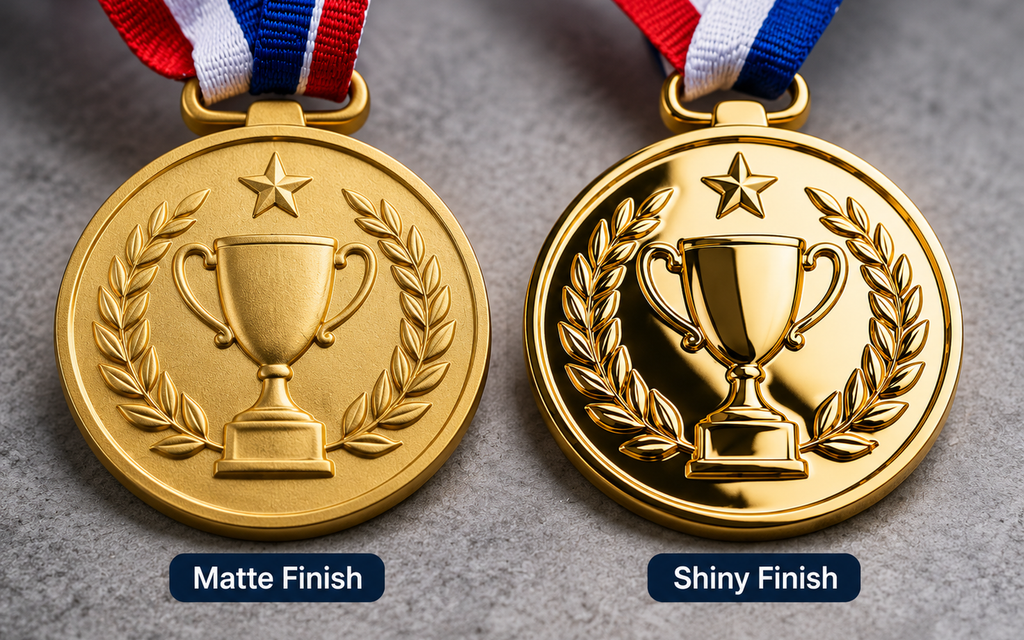
2. Why Do We Often Recommend Matte Finishes?
At Medal-Ray, we often suggest considering a matte or satin appearance for projects that do not specifically require a highly polished look.
One reason is the way the surface appears after handling.
Highly reflective surfaces can make fingerprints, fine handling marks and minor scratches more noticeable.
A lower-gloss surface may make some of these marks less visually obvious.
This can be useful for medals that will be handled frequently, packed individually, distributed at events or kept as souvenirs.
Matte finishes can also create a softer metallic appearance, which some buyers prefer for modern or understated designs.
However, an important distinction should be made:
A matte finish is not automatically more scratch-resistant than a shiny finish.
Actual wear resistance depends on factors such as the plating material, surface treatment, protective coating and conditions of use.
The practical advantage of matte is often that certain surface marks are less visible, not that scratches cannot occur.
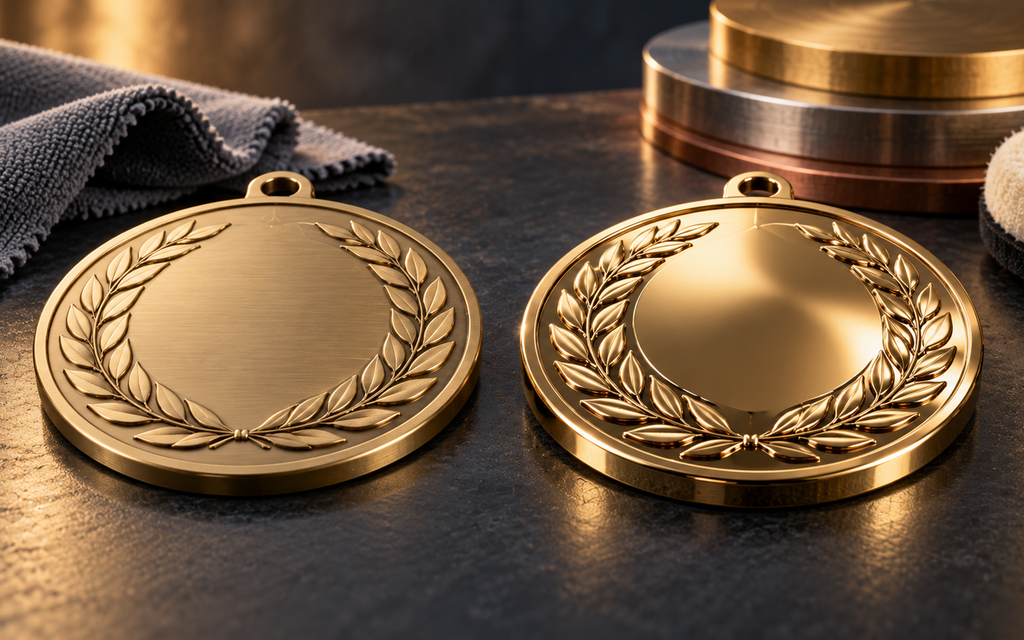
3. Why Can Shiny Finishes Be More Demanding to Produce?
A highly polished metal surface can look impressive when properly manufactured.
However, it may also make certain surface defects easier to notice.
Before plating, metal components may require trimming, cleaning and polishing to achieve the required appearance.
If the surface has visible polishing marks, tiny pits, uneven areas or other defects, a reflective finish can make those imperfections stand out.
The issue is not simply whether a medal has been plated.
It is whether the underlying surface has been prepared to meet the expected cosmetic standard.
A factory may need to spend additional time preparing or inspecting components for a demanding high-gloss finish.
If defects are identified, some products may require rework, while others may not be economical to repair.
This is one reason why the visual requirements of a finish can affect production costs.
The exact difference depends on the design, manufacturing process and inspection standard.

4. The Hidden Cost of Rework and Rejected Products
Manufacturing cost is not determined only by the number of finished medals delivered to the customer.
A factory also needs to account for the time and materials consumed during production.
Some components pass inspection and are ready for delivery.
Others may need additional finishing or rework.
Products that cannot meet the agreed requirements may need to be rejected.
Depending on the condition of a product, a manufacturer may retain it as an internal finish reference or handle it through an appropriate recycling or disposal process.
For example, a medal with a minor cosmetic defect might still be useful for demonstrating a relief pattern or plating color internally, even though it does not meet the customer’s agreed appearance requirements.
That does not make it an acceptable product for the customer’s order.
The cost of delivering qualified products includes the production work that does not result in saleable pieces.
This is why quality control and manufacturing yield matter when comparing quotations.
A lower processing cost does not always mean a lower total cost of producing an acceptable finished medal.
5. When Is a Shiny Finish the Better Choice?
Despite the additional attention that may be required, shiny finishes remain an excellent choice for many projects.
Some buyers specifically want a bright, reflective metal appearance.
This can suit formal awards, traditional gold-silver-bronze medal sets or designs that rely on strong contrast between polished metal and colored enamel.
A shiny finish can also be part of the buyer’s intended visual identity.
In these situations, choosing matte simply because it may conceal minor handling marks would not necessarily be appropriate.
The goal is to achieve the intended appearance while agreeing on realistic manufacturing and cosmetic expectations.
It is also important to remember that shiny does not automatically mean premium, just as matte does not automatically mean inexpensive.
Both finishes can be manufactured to different quality standards.
6. What About Antique Gold, Antique Silver and Black Nickel?
Beyond conventional shiny and matte finishes, buyers may consider antique gold, antique silver, antique bronze, nickel or black nickel.
Antique finishes can make relief details easier to distinguish by increasing contrast between raised and recessed surfaces.
This makes them worth considering for detailed 3D artwork, architectural designs or metal-only medals.
Nickel and black nickel create different metal tones and may suit artwork where conventional gold, silver or bronze is not the preferred appearance.
However, special colors should be evaluated against the actual design.
A dark metal finish may change the visibility of small details, while a highly reflective surface may change how the design looks under different lighting.
When appearance is important, reviewing an appropriate physical finish sample can be more useful than relying only on a digital rendering.
7. How Should Buyers Choose a Metal Finish?
A practical decision begins with three questions.
What appearance should the medal have?
Choose shiny when a bright, polished look is an important part of the design.
Consider matte or satin when a softer, less reflective appearance is preferred.
Consider antique finishes when contrast within the relief is particularly important.
How will the medal be handled or displayed?
Frequent handling, storage conditions and expected surface appearance may affect which finish is most suitable.
A finish that looks excellent under studio lighting may show marks differently during normal use.
What level of surface consistency does the project require?
Clarify expectations for polishing quality, visible marks, plating consistency and acceptable cosmetic defects.
For projects with demanding appearance requirements, a physical sample or approved finish reference can help establish expectations before mass production.
Final Thoughts
Choosing a custom medal finish involves more than selecting gold, silver or bronze.
Matte, shiny and antique effects change how the metal reflects light, how relief details appear and how noticeable certain surface marks may become.
They can also influence the amount of surface preparation and quality control required during manufacturing.
At Medal-Ray, we often recommend considering matte finishes when buyers want a refined appearance with less visible handling marks.
But the final choice should always support the design and the intended use of the medal.
The right finish is not simply the brightest one. It is the one that works for your product.
More Than Just a Quotation.
For custom medal inquiries, contact ray@craftmedals.com.
Have a Custom Medal Project?
Share your design, size and estimated quantity. We’ll help review the manufacturing requirements.