
Why Custom Medals With the Same Size Can Have Different Prices
Two customers request 500 custom medals. Both medals are 70 mm in diameter, and both designs feature 3D relief.
Should the prices be the same?
Not necessarily.
Medal diameter and order quantity are important, but they do not tell the whole story. The material, actual metal weight, design structure, surface finish and manufacturing requirements can all affect the final cost.
More importantly, two buyers may have very different expectations for their medals.
Understanding those differences is a better starting point than simply asking for the lowest possible price.
1. The Same Diameter Does Not Mean the Same Metal Weight
A 70 mm medal is not necessarily the same weight as another 70 mm medal.
Thickness, shape, open areas and relief structure all influence how much metal is used.
For example, a medal intended for a major sporting event may be designed with a substantial metal body and pronounced relief to create a heavier feel in the hand.
A different project may prioritize a lighter medal to help manage manufacturing and shipping costs.
Both products can share the same outer dimensions while requiring different amounts of material.
For zinc alloy die-cast medals, this matters because metal consumption is one component of production cost.
However, weight alone does not determine the price. The manufacturing process and design must also be considered.

2. Material Choice Can Change the Manufacturing Method
Zinc alloy die casting is widely used for custom medals because it can reproduce detailed shapes and raised or recessed features.
But not every design needs the same manufacturing method.
For some relatively simple designs, a stamped iron medal may be a practical alternative. This depends on the required relief, shape, thickness and finishing details.
A complex 3D design cannot automatically be transferred to a stamped iron product without changes.
This is why choosing a lower-cost material should begin with a review of the artwork rather than a simple material substitution.
The objective is to find a manufacturing method that suits the product, not merely to replace one metal with another.
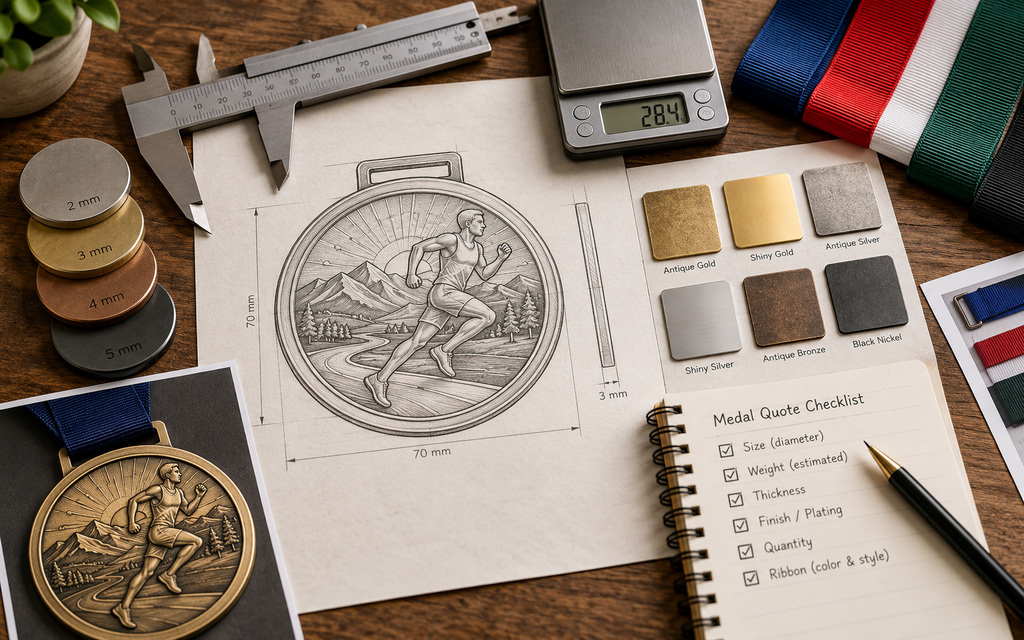
3. Relief Details and Color Finishes Affect Production Cost
Two medals may both be described as “3D,” yet their manufacturing requirements can be very different.
One design may use relatively simple raised lettering and a metal-only finish.
Another may include detailed figures, complex backgrounds, multiple color areas or additional decorative effects.
Depending on the artwork, production may involve different requirements for mold preparation, polishing, plating, enamel filling, UV printing or other finishing operations.
These differences influence processing time, manufacturing complexity and quality control.
It is therefore difficult to judge a medal’s cost from the words “70 mm, 3D” alone.
The actual design matters.
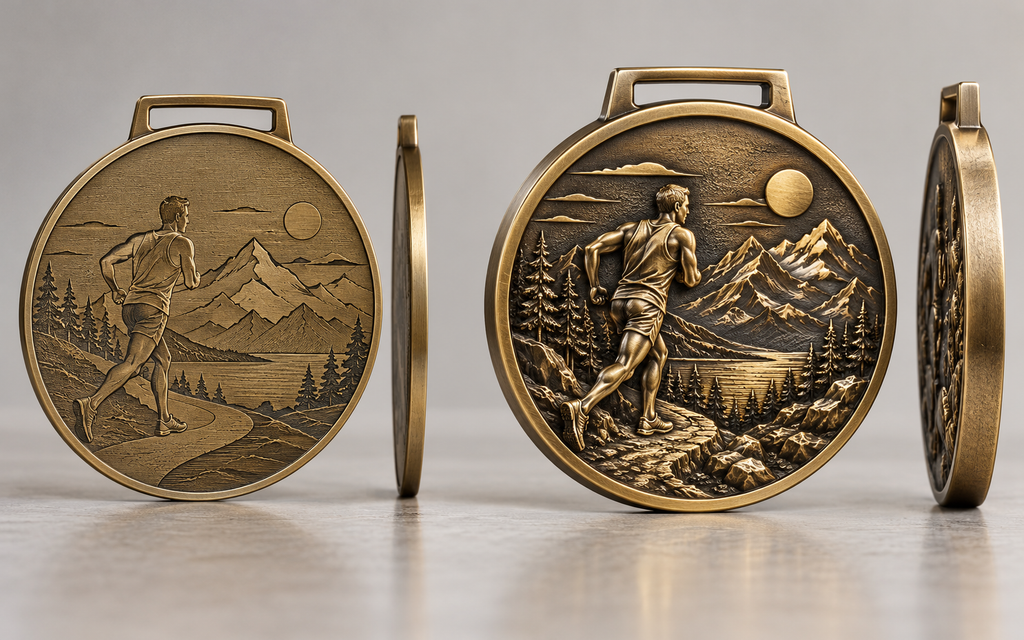
4. Different Buyers Have Different Priorities
Consider two projects with the same medal diameter and order quantity.
Project A: A commemorative medal for a major event
The buyer wants a medal that feels substantial, looks refined and serves as a lasting keepsake.
For this project, preserving the intended weight, relief detail and surface appearance may be more important than achieving the lowest unit price.
Project B: A cost-conscious medal for resale
The buyer needs a product that is attractive, manufacturable and commercially competitive.
If the design allows it, reducing thickness, simplifying certain details or evaluating a different manufacturing method may help manage costs.
Neither approach is automatically better.
The appropriate specification depends on what the buyer needs the medal to achieve.
A lower price is useful only when the resulting product still meets those requirements.
5. A Lower Price May Require a Different Specification
When buyers ask for a better price, there are two different possibilities.
The manufacturer may be able to review the original quotation and offer a more competitive price without changing the specifications.
Alternatively, meaningful cost reduction may require adjustments to the product itself.
Possible changes include:
- Reducing metal thickness or weight where the design permits.
- Simplifying relief details or difficult manufacturing features.
- Reviewing the number and type of color-finishing processes.
- Considering a different metal-forming process when suitable.
These changes should always be discussed openly.
For example, a lightweight 2D stamped medal should not be presented as equivalent to a heavier die-cast medal with deep 3D relief.
Both may serve their intended purposes, but they are not necessarily the same product.
6. Why a Clear Budget Can Help
Some buyers already have a target price. Others prefer to receive a quotation before sharing their budget.
Both approaches are understandable.
A clear target price can help the manufacturer evaluate whether alternative specifications may be appropriate.
Without a target budget, the manufacturer can still prepare a quotation based on the requested design and specifications.
At Medal-Ray, our preferred approach is straightforward: start by quoting the product the buyer actually requests.
If the quoted price does not meet the buyer’s expectations, we can then discuss which specifications, if any, can reasonably be adjusted.
There is no need to present several unnecessary alternatives before understanding whether the original proposal meets the buyer’s needs.
7. Why the Lowest Quotation Is Not Always the Best Comparison
Manufacturers may have different production methods, pricing structures and order-size preferences.
Two quotations can also reflect different assumptions about materials, finishing requirements or acceptable product quality.
That does not mean a lower-priced supplier necessarily produces an inferior product.
It means buyers should confirm that the quotations are based on comparable specifications.
Before making a decision, check whether both prices include the same material, thickness, relief requirements, surface finish, ribbon specifications and tooling charges.
Quality expectations and any requested inspection standards should also be clear.
A meaningful price comparison starts with a meaningful specification comparison.
Final Thoughts
There is no single correct price for every 70 mm custom medal.
The best manufacturing choice depends on the artwork, metal weight, production method, finishing requirements and intended use.
For buyers, a useful first step is to provide the design, expected size and estimated quantity.
A manufacturer can then review the requirements, identify important technical details and prepare an initial quotation.
If cost adjustments are necessary, those discussions are more productive when both sides understand what can change and what should remain unchanged.
A better medal price starts with the right specifications.
At Medal-Ray, we focus on understanding your design before discussing practical manufacturing options.
More Than Just a Quotation.
Why Custom Medals With the Same Size Can Have Different Prices
Two customers request 500 custom medals. Both medals are 70 mm in diameter, and both designs feature 3D relief.
Should the prices be the same?
Not necessarily.
Medal diameter and order quantity are important, but they do not tell the whole story. The material, actual metal weight, design structure, surface finish and manufacturing requirements can all affect the final cost.
More importantly, two buyers may have very different expectations for their medals.
Understanding those differences is a better starting point than simply asking for the lowest possible price.
1. The Same Diameter Does Not Mean the Same Metal Weight
A 70 mm medal is not necessarily the same weight as another 70 mm medal.
Thickness, shape, open areas and relief structure all influence how much metal is used.
For example, a medal intended for a major sporting event may be designed with a substantial metal body and pronounced relief to create a heavier feel in the hand.
A different project may prioritize a lighter medal to help manage manufacturing and shipping costs.
Both products can share the same outer dimensions while requiring different amounts of material.
For zinc alloy die-cast medals, this matters because metal consumption is one component of production cost.
However, weight alone does not determine the price. The manufacturing process and design must also be considered.
2. Material Choice Can Change the Manufacturing Method
Zinc alloy die casting is widely used for custom medals because it can reproduce detailed shapes and raised or recessed features.
But not every design needs the same manufacturing method.
For some relatively simple designs, a stamped iron medal may be a practical alternative. This depends on the required relief, shape, thickness and finishing details.
A complex 3D design cannot automatically be transferred to a stamped iron product without changes.
This is why choosing a lower-cost material should begin with a review of the artwork rather than a simple material substitution.
The objective is to find a manufacturing method that suits the product, not merely to replace one metal with another.
3. Relief Details and Color Finishes Affect Production Cost
Two medals may both be described as “3D,” yet their manufacturing requirements can be very different.
One design may use relatively simple raised lettering and a metal-only finish.
Another may include detailed figures, complex backgrounds, multiple color areas or additional decorative effects.
Depending on the artwork, production may involve different requirements for mold preparation, polishing, plating, enamel filling, UV printing or other finishing operations.
These differences influence processing time, manufacturing complexity and quality control.
It is therefore difficult to judge a medal’s cost from the words “70 mm, 3D” alone.
The actual design matters.
4. Different Buyers Have Different Priorities
Consider two projects with the same medal diameter and order quantity.
Project A: A commemorative medal for a major event
The buyer wants a medal that feels substantial, looks refined and serves as a lasting keepsake.
For this project, preserving the intended weight, relief detail and surface appearance may be more important than achieving the lowest unit price.
Project B: A cost-conscious medal for resale
The buyer needs a product that is attractive, manufacturable and commercially competitive.
If the design allows it, reducing thickness, simplifying certain details or evaluating a different manufacturing method may help manage costs.
Neither approach is automatically better.
The appropriate specification depends on what the buyer needs the medal to achieve.
A lower price is useful only when the resulting product still meets those requirements.
5. A Lower Price May Require a Different Specification
When buyers ask for a better price, there are two different possibilities.
The manufacturer may be able to review the original quotation and offer a more competitive price without changing the specifications.
Alternatively, meaningful cost reduction may require adjustments to the product itself.
Possible changes include:
- Reducing metal thickness or weight where the design permits.
- Simplifying relief details or difficult manufacturing features.
- Reviewing the number and type of color-finishing processes.
- Considering a different metal-forming process when suitable.
These changes should always be discussed openly.
For example, a lightweight 2D stamped medal should not be presented as equivalent to a heavier die-cast medal with deep 3D relief.
Both may serve their intended purposes, but they are not necessarily the same product.
6. Why a Clear Budget Can Help
Some buyers already have a target price. Others prefer to receive a quotation before sharing their budget.
Both approaches are understandable.
A clear target price can help the manufacturer evaluate whether alternative specifications may be appropriate.
Without a target budget, the manufacturer can still prepare a quotation based on the requested design and specifications.
At Medal-Ray, our preferred approach is straightforward: start by quoting the product the buyer actually requests.
If the quoted price does not meet the buyer’s expectations, we can then discuss which specifications, if any, can reasonably be adjusted.
There is no need to present several unnecessary alternatives before understanding whether the original proposal meets the buyer’s needs.
7. Why the Lowest Quotation Is Not Always the Best Comparison
Manufacturers may have different production methods, pricing structures and order-size preferences.
Two quotations can also reflect different assumptions about materials, finishing requirements or acceptable product quality.
That does not mean a lower-priced supplier necessarily produces an inferior product.
It means buyers should confirm that the quotations are based on comparable specifications.
Before making a decision, check whether both prices include the same material, thickness, relief requirements, surface finish, ribbon specifications and tooling charges.
Quality expectations and any requested inspection standards should also be clear.
A meaningful price comparison starts with a meaningful specification comparison.
Final Thoughts
There is no single correct price for every 70 mm custom medal.
The best manufacturing choice depends on the artwork, metal weight, production method, finishing requirements and intended use.
For buyers, a useful first step is to provide the design, expected size and estimated quantity.
A manufacturer can then review the requirements, identify important technical details and prepare an initial quotation.
If cost adjustments are necessary, those discussions are more productive when both sides understand what can change and what should remain unchanged.
A better medal price starts with the right specifications.
At Medal-Ray, we focus on understanding your design before discussing practical manufacturing options.
More Than Just a Quotation.
For a custom medal quotation, contact us at ray@craftmedals.com.
Have a Custom Medal Project?
Share your design, size and estimated quantity. We’ll help review the manufacturing requirements.